English
 Spanish
 Italian

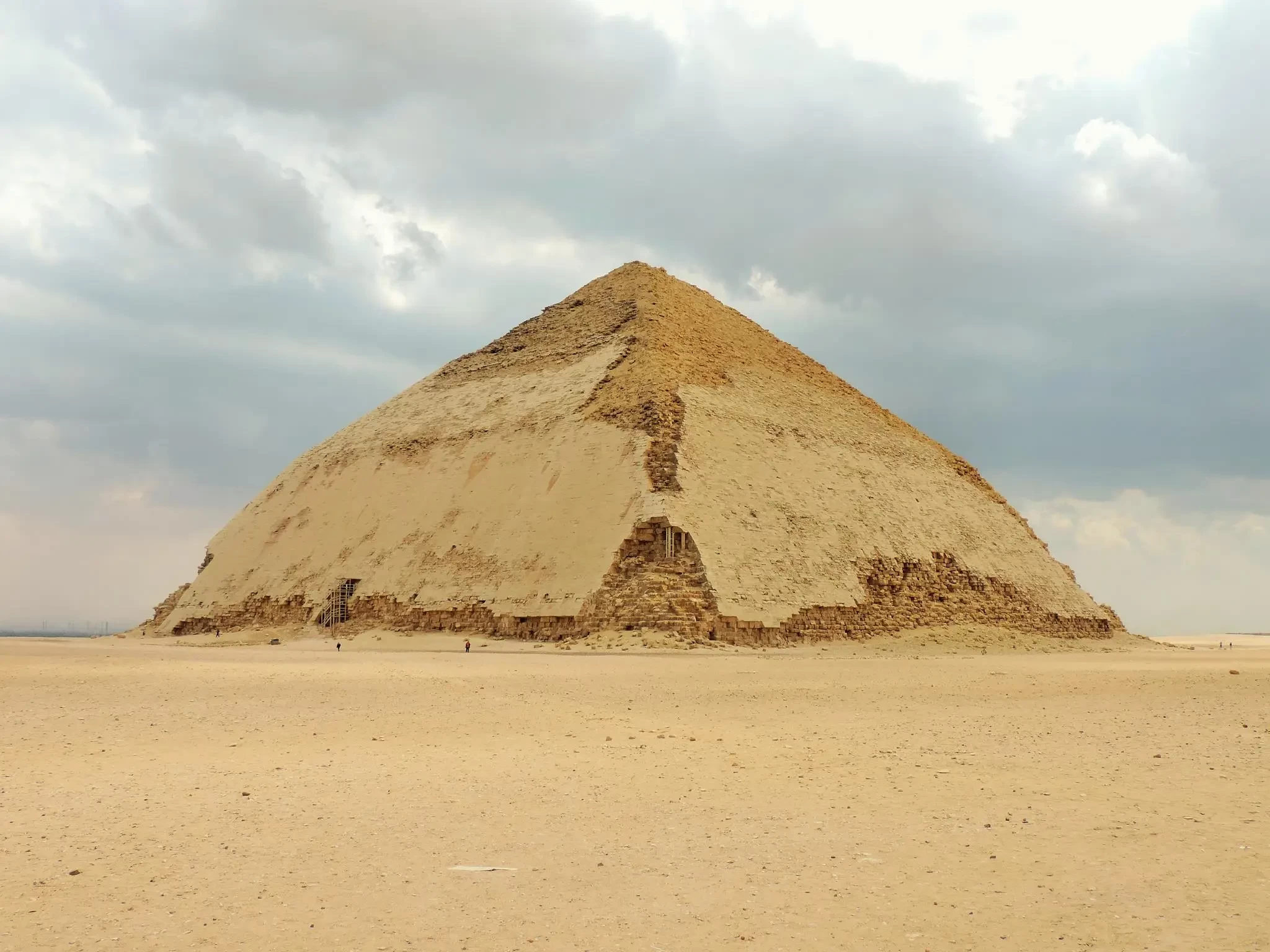
Dahshur
Dahshur Egypt is of the most fascinating archaeological sites near Cairo, and it gives visitors a chance to look at some of the most impressive pyramids from the Old Kingdom period. It sits around 40 kilometers south of Cairo, and Dahshur is actually part of the well known pyramid landscapes, you know the ones people link with Saqqara and Giza. Lots of travelers go for the Great Pyramids of Giza, but Dahshur tends to be calmer, more genuine, where you can appreciate ancient Egyptian building work without the big, noisy crowds.
Now, the Dahshur necropolis was created in the Fourth Dynasty of ancient Egypt and then it turned into a major royal burial zone for pharaohs. This place is mostly remembered for the Bent Pyramid and the Red Pyramid, two standout structures that were built during the rule of Pharaoh Sneferu. He’s often described as the founder of the Fourth Dynasty and also the father of Pharaoh Khufu, the person behind the Great Pyramid of Giza.
So yeah, Dahshur is a must for anyone into ancient history, archaeology, and Egyptian civilization. Many Egypt tours fold Dahshur in together with Saqqara and Memphis, so the route feels more complete, like a full story about how pyramid building developed, and what the ancient Egyptians achieved.
The Bent Pyramid of Dahshur: An Architectural Experiment of Pharaoh Sneferu
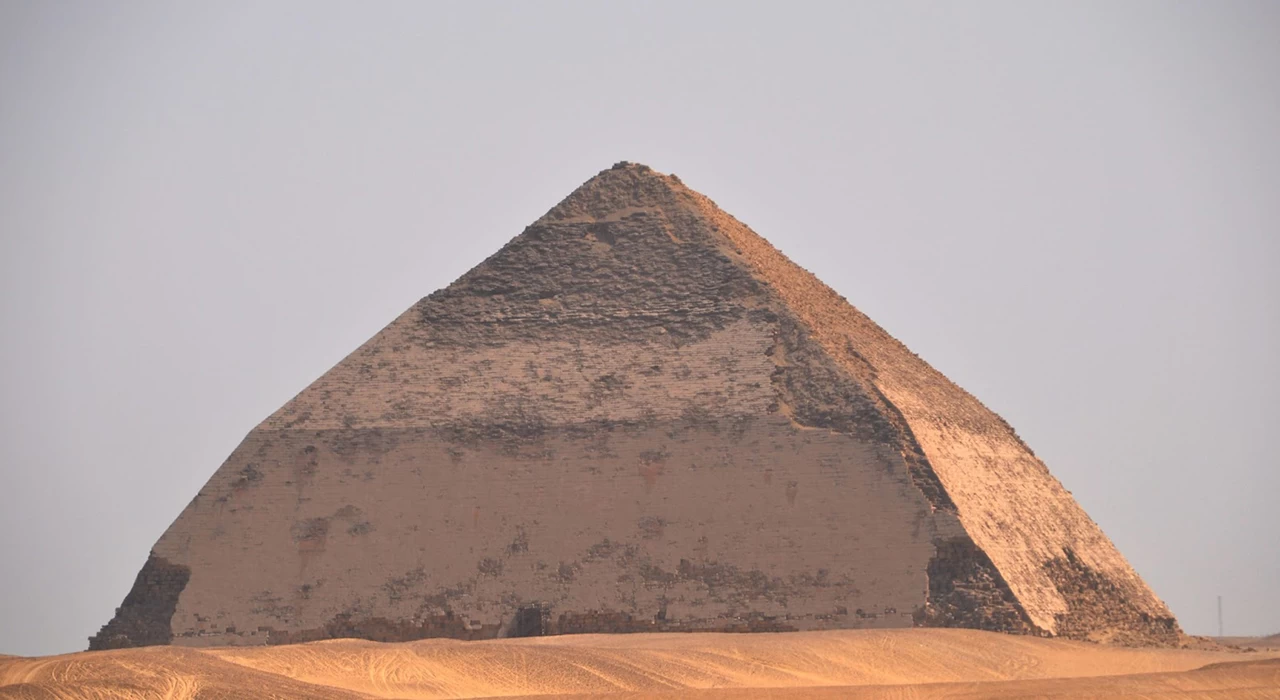
The Bent Pyramid of Dahshur is sort of one of those standout pyramids in Egypt, and honestly it’s a big attention grabber within the Dahshur archaeological complex . It was put up around 2600 BCE while Pharaoh Sneferu was in charge and for many people it feels like an actual architectural trial , more than “just another pyramid.” The whole thing is noticeable, because the pyramid doesn’t keep the same angle all the way there’s that clear bend , roughly halfway up, so from a distance it almost “reads” as a different shape mid construction.
This pyramid is also considered one of the earliest moves toward a real smooth faced design. In the beginning, the builders shaped the lower portion with a steep inclination, about 54 degrees, but later they relaxed it to something near 43 degrees. Scholars often link the shift to structural worries, like, they probably felt the mass might be less secure if they pushed too hard with that first slope. So the change seems practical, maybe even urgent, not just artistic.
Also, unlike several other ancient pyramids that lost almost everything outside, the Bent Pyramid still keeps a good quantity of its original white limestone shell. Because of that, visitors can better picture how it may have looked in earlier times, when it was bright and striking, instead of partially worn. That outer condition is more than pretty , it gives real clues about engineering methods and the difficult problems early pyramid teams had to work through, day by day.
If you explore the Bent Pyramid in person, it can feel like seeing a turning point in architectural history. The experience and lessons taken from this build helped later Egyptian builders refine their procedures, which then supported the creation of the Great Pyramid of Giza , one of the Seven Wonders of the Ancient World.
Why Dahshur Is One of the Best Places to Visit near Cairo
Dahshur Egypt gives travelers this rare kind of experience where you can explore Egypt’s history a little further, past the big headline attractions. And honestly compared with the busy Giza Plateau , Dahshur feels calmer, sort of this quiet desert mood, and it lets you wander near old monuments while still really noticing how enormous everything is, without those heavy crowds around you.
It is also pretty important if you want to understand how pyramid building changed over time. When you visit Dahshur egypt you can watch the progression from early pyramid ideas into the more refined structures that later became like signature symbols of ancient Egypt. The Bent Pyramid and the Red Pyramid together show a clear story of innovation, trying new things, and architectural achievement, all in one place.
A lot of visitors also merge Dahshur with nearby historical locations like Saqqara, which is where the Step Pyramid of Djoser is, and Memphis, the ancient capital of Egypt. These stops make a meaningful route through the beginnings of Egyptian civilization, and they help you grasp a deeper sense of how the pharaohs built their world, and then how they ruled. Many Egypt day tours are designed specifically to include all these highlights in one full-day experience
If you’re into photography, Dahshur is a solid choice too. The wide desert space, the unusual pyramid forms, and that warm golden light can give you really memorable shots, like you’re capturing ancient wonders, not just looking at them.
Ancient Dahshur stands today as one of the most important archaeological landscapes in Egypt, preserving the early experiments of pyramid construction that shaped the future of royal tomb design.
Planning Your Visit to Dahshur Egypt
Going to Dahshur is sort of a must if you really care about ancient Egyptian history, and architecture too. The place gives a rare chance to get close to some of Egypt’s oldest and most important pyramids, in a calmer atmosphere than you might expect. So if you’re a history buff, an archaeology lover, or just a traveler hunting for unusual corners of Egypt, Dahshur tends to feel unforgettable.
For the timing, the best time to visit Dahshur is usually in the cooler months, from October to April , when the heat is gentler and walking around feels easier, especially in that desert zone. Visitors should wear comfy shoes, carry water, and generally be ready for outdoor wandering. If you can hire an experienced guide, even better, because they can explain why each pyramid matters, and share the little stories that surround how they were built, step by step.
A lot of Egypt tours pack Dahshur into a full-day pyramid route that also includes Saqqara and Memphis. That way you can see the whole progression, from the earliest experiments, to the grand monuments that still make people stare today. It’s like looking at the bigger picture without rushing.
Overall, Dahshur stays one of Egypt’s most impressive yet underrated archaeological gems, with its special pyramids, kind of fascinating background, and connections to how ancient Egyptian building habits evolved, feels like a little time machine ,something every traveler should really try at least once. When you go there you dont only watch the might of the pharaohs , you also notice the inventiveness and steady determination of the workers who helped shape one of the world’s most influential civilizations.
-webp.webp "Giza pyramids")




.webp "AIR CAIRO")



.webp "Meliá Madrid")