English
 Spanish
 Italian

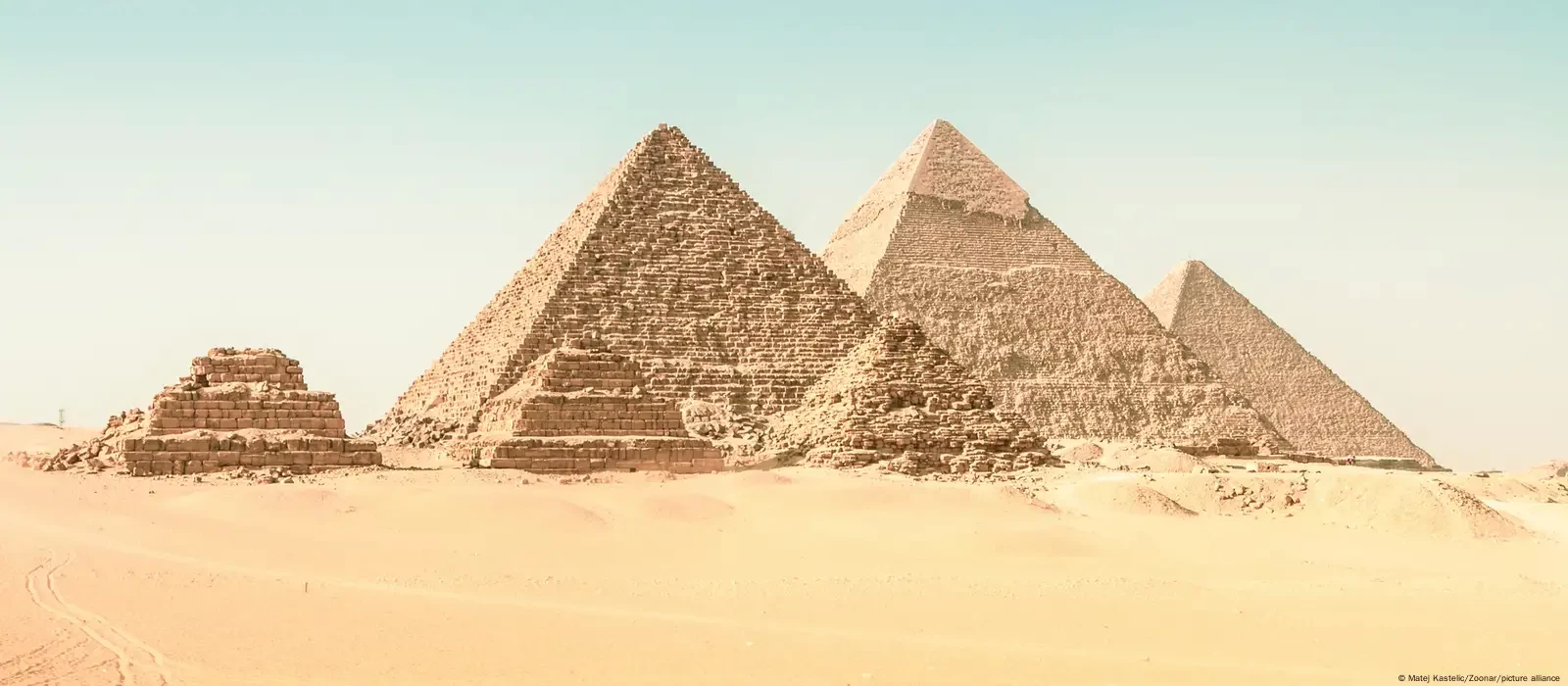
The Pyramid of Khufu
You know the Pyramid of Khufu, it’s basically the Great Pyramid of Giza, and honestly it feels hard to believe it’s real. It sits on the well known Giza Pyramid Complex near Cairo, Egypt, and from a distance it just looks larger than everything around it. It’s not only the biggest of the three main pyramids in that area, it’s also the oldest one. The whole thing was built while Pharaoh Khufu was ruling, during the Fourth Dynasty, so yeah, this ancient marvel keeps drawing attention even now. Every year millions of visitors, historians, and researchers, come here for a closer look.
What makes it extra special is that it’s the only one still standing among the original Seven Wonders of the Ancient World. In other words, the Khufu Pyramid is like the highlight reel of ancient Egyptian engineering, plus cultural brilliance all mixed together. The sheer mass, the careful build, and those still unclear beginnings make it one of the most researched sites in archaeology. And even after more than 4,500 years, the Great Pyramid of Giza continues to spark that same kind of awe, plus curiosity you usually only feel with living legends.
If you’re a tourist at the Giza Pyramid Complex with Egypt Day Tours, you’ll probably notice the scale right away. People keep talking about how perfect it looks, and how unreal the dimensions feel, even after all the studies. Still, despite centuries of investigation, a lot of details about how it was constructed remain a mystery, which is probably why it never loses its global pull. Whether you call it the Great Pyramid of Giza, the Khufu Pyramid, or the main focus of the Giza Pyramid Complex, it stays a lasting sign of human achievement.
The History and Construction of the Khufu Pyramid
So the Khufu Pyramid was put up roughly around 2580–2560 BCE, as a burial place , for Pharaoh Khufu, who was one of the strongest rulers in ancient Egypts Old Kingdom . The building of the Great Pyramid of Giza, took like 20 to 30 years, and it wasn’t some small task, it required a kind of managed effort from tens of thousands of trained people, engineers, and artisans too.
Newer archaeology findings kind of changed the story. The builders, were not slaves as it was once said for a long time. Instead they were organized laborers, fed well, and living in nearby settlements in and around the Giza Pyramid Complex. These workers had a lot of practical skill in cutting stone, moving the blocks, and setting them into place with an accuracy that still feels, honestly, unreal.
When it was finished, the Great Pyramid of Giza stood at about 146.6 meters (481 feet), so for almost 3,800 years it was the tallest human made structure on Earth. But nowadays, because the outer facing stones are gone, its height is closer to 138.8 meters (455 feet). Altogether, the pyramid was made with roughly 2.3 million limestone and granite blocks, and some of those could weigh as much as 15 tons.
One of the big mysteries, is still how those huge stones were moved and then assembled with that level of correctness. People talk about ramps, sledges, and other engineering methods that were fairly clever for their era. Yet, no single theory has been fully agreed upon. Also the way the Great Pyramid lines up with the cardinal points, seems to show serious astronomical awareness, and mathematical know how from the ancient Egyptian builders.
Architecture, Design and some hidden secrets in the Giza Pyramid Complex
The Great Pyramid of Giza isn’t only a huge pile of stone, it’s also this very sophisticated architectural work inside the wider Giza Pyramid Complex. Its footprint is more than 13 acres, and each side runs about 230 meters (756 feet). The pyramid’s almost perfect geometric layout keeps catching the attention of modern engineers, and scientists too.
Inside the Khufu Pyramid, there’s a whole network of corridors and rooms, kind of like a carefully planned maze that points to ancient Egyptian brilliance. You can find the Descending Passage, the Ascending Passage, the Grand Gallery, the Queen’s Chamber, and the King’s Chamber. In the King’s Chamber, there is a large granite sarcophagus, widely thought to be meant for Pharaoh Khufu’s burial.
What’s above the King’s Chamber is especially interesting, because there are a few relieving chambers meant to ease pressure. The idea was to help prevent the structure from collapsing because of its own weight, or so the design suggests. That structural stability approach shows a level of understanding that feels far beyond what people expect from that time.
More recently, new technological studies have uncovered hidden empty spaces within the pyramid, using non-invasive surveying methods like muon radiography. After these results, curiosity around the whole Giza Pyramid Complex grew again, and researchers are still trying to understand what other things the Khufu Pyramid may still be holding.
Originally, the pyramid wore smooth white limestone casing stones, these blocks would catch and reflect sunlight, so it shined out across the desert. Later, those stones were taken off and reused elsewhere, and that’s why the stepped look is what you see today, rather than the earlier, polished shell.
Visiting the Giza Pyramid Complex and the Khufu Pyramid Today
Going to the Giza Pyramid Complex is, honestly, one of the most visited tourist things in Egypt, and the Khufu Pyramid is usually the main reason people come. It’s pretty close to Cairo, and the area has more than just one pyramid there are also the Khafre Pyramid and Menkaure Pyramid, plus the famous Great Sphinx.
Once you’re there you can wander near the base of the Great Pyramid of Giza, see its huge surfaces, and if access is available, enter some of the interior corridors. Walking through those tight passageways, that sort of leads you toward the King’s Chamber, feels special, like a once-in-a-lifetime moment inside one of the world’s oldest monuments.
About the timing, the best time to visit the Giza Pyramid Complex is generally between October and April, because the weather tends to be cooler, and you’ll feel more comfortable while walking around. If you can, go early in the morning, it helps to dodge the biggest crowd and you may get great photos of the Khufu Pyramid with soft light, almost golden.
Also, visitors often mix in camel rides, wide panorama viewpoints, small museums, and sound-and-light shows. Those activities make the Great Pyramid of Giza feel more real, more alive. And, guided tours are really worth it, because you get a clearer idea of the pyramid’s history, how it was built, and why it matters culturally.
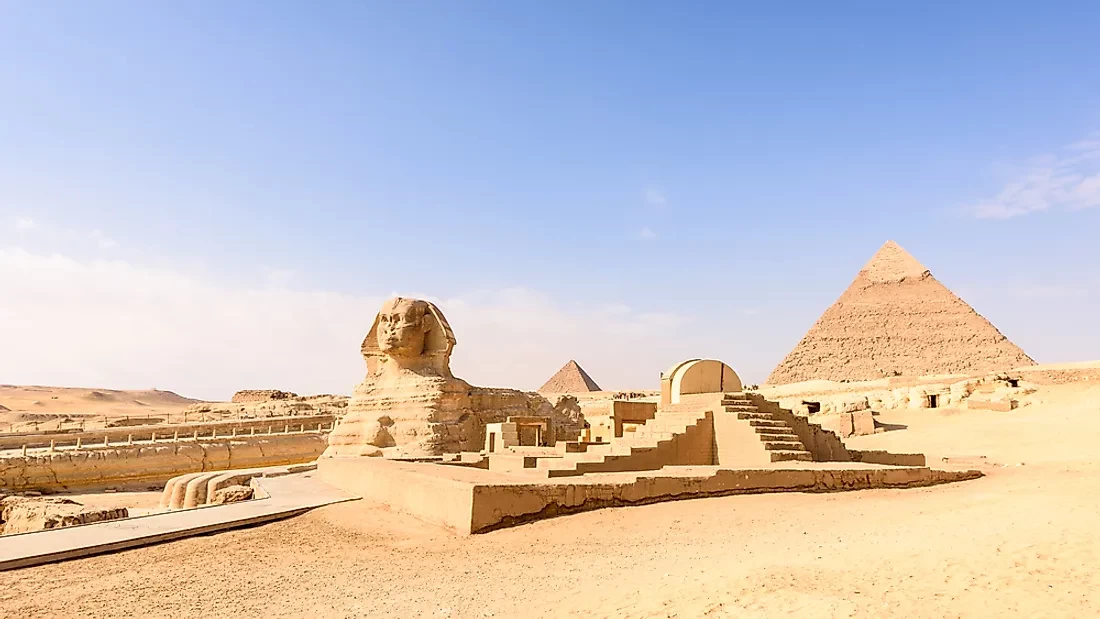
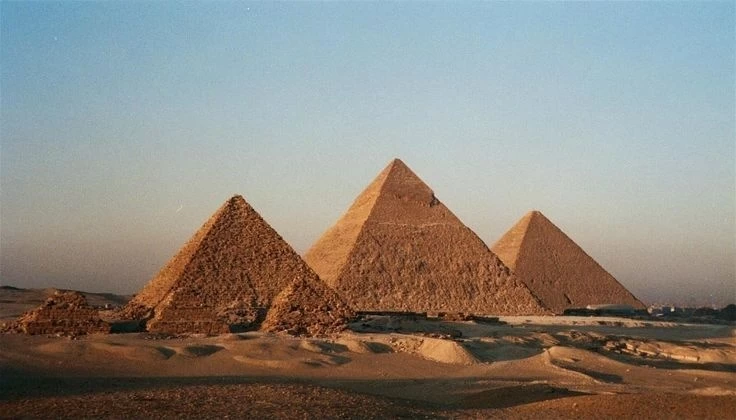
-webp.webp "The Giza Pyramids")




.webp "AIR CAIRO")



.webp "Meliá Madrid")